Getting the Most Out of Futureworks
Most OKR programs don't fail because the framework is broken. They fail because the tool ends up doing the job of a slightly fancier spreadsheet — goals get typed in once a quarter, nobody opens it again until the next review, and the actual work happens somewhere else entirely. If that sounds familiar, the problem usually isn't Futureworks. It's that the platform never got asked to do what it's actually built for.
Here's what using it properly looks like — not a feature tour, a practical guide to getting the alignment you're actually paying for.
Start With Fewer Objectives, Not More
The single most common way teams undercut Futureworks' 360 Vision before they've even started: typing in ten objectives because ten things feel important, instead of three or four that actually are. The goal tree only tells you something useful when there's a short enough list at the top that every team's work can genuinely trace back to it. Ten company objectives don't cascade, they just scatter.
Before you set this quarter's OKRs in the platform, do the harder work outside it first: pick the handful of outcomes that matter enough to say no to other things for, and only then build the structure down from there. 360 Vision will show you, instantly, which teams have nothing connecting their work to the top, but only if the top is small enough to mean something.
Assign Ownership to Whoever's Actually Doing the Work
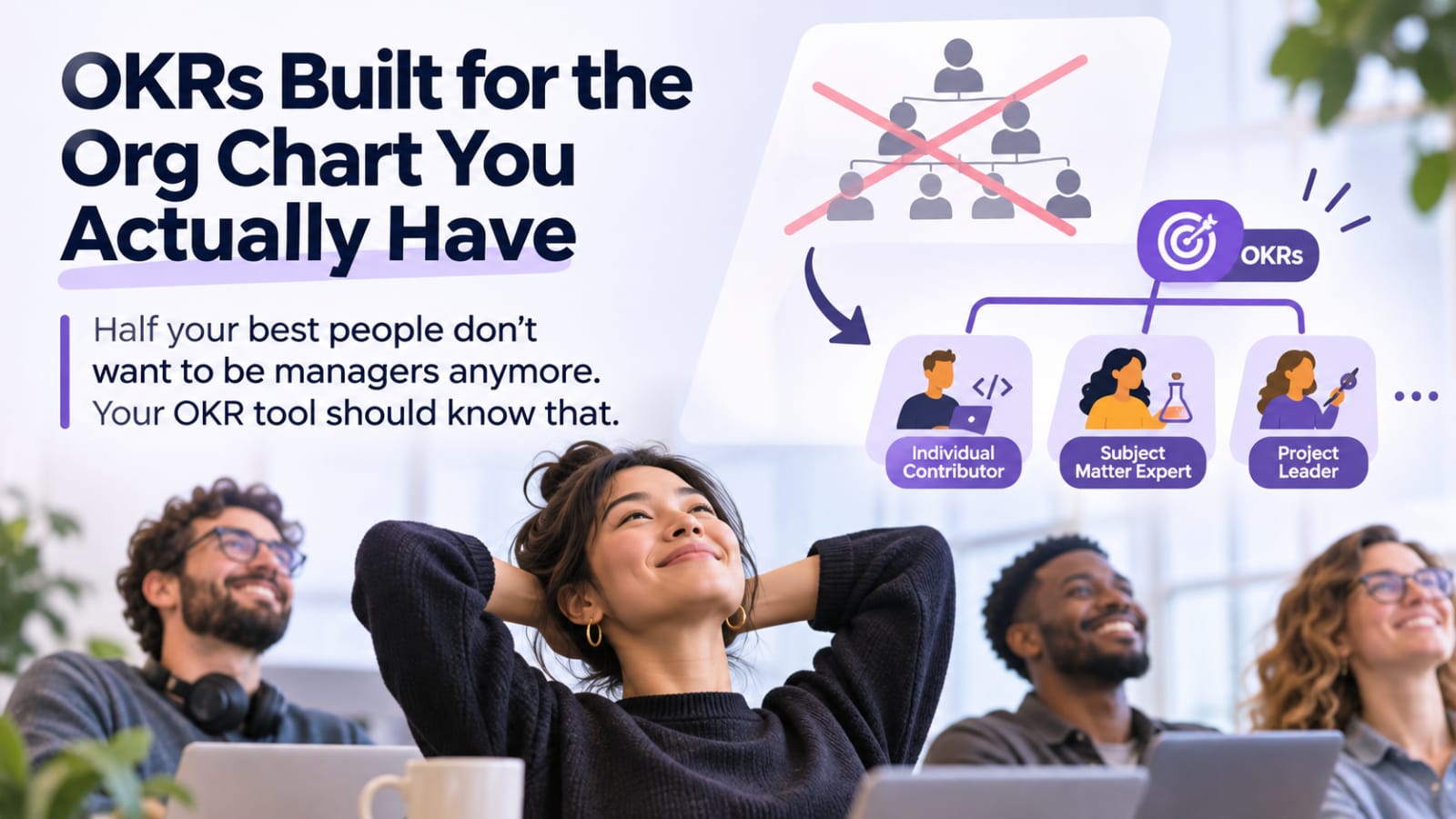
A lot of OKR tools quietly force every Key Result onto a manager, whether or not that's who's really driving it. Futureworks doesn't make you do that. Every goal, Key Result, and initiative has a single named owner, but that owner doesn't need to have direct reports or a manager title. It can be a senior individual contributor, a subject matter expert, or whoever the team agreed should carry it this cycle, whoever's closest to the outcome, not whoever has the right box on the org chart.
The habit worth building: every time you set up a Key Result, ask who actually touches this day to day, and name that person as the owner, not "their manager," out of tidiness. If you're appointing a "manager of record" just so the software has somewhere to put the accountability, that's a sign the habit hasn't caught up with what the platform actually allows.
Check In Weekly, Not Just at Quarter's End
360 Vision is only worth what it shows you, and it can only show you something current if people are actually updating it. Teams that open Futureworks once a quarter get a nasty surprise at the review: a Key Result that's been quietly off track since week three, discovered in week twelve, with nothing left to do about it.
Researchers studying goal-setting call this "escalation of commitment": once a team's publicly behind a number, there's real pressure to keep insisting it's fine rather than flag it early. A weekly five-minute update habit, not a meeting, just an honest number, is the single cheapest thing that breaks that pattern. If your goal tree is only ever accurate on review day, it's not actually giving you visibility; it's giving you a quarterly report with extra steps.
Let Meeting Mode Do the Boring Part
If your OKR review meetings are mostly people reading their own numbers out loud while everyone else waits their turn, you're running the meeting Futureworks built Meeting Mode specifically to replace. The numbers and status should already be visible before anyone sits down, so the meeting itself is for the two or three things that actually need a conversation: a blocked Key Result, a priority call, a trade-off someone needs a decision on.
If your reviews still run long on status and short on decisions, that's usually a sign the habit hasn't caught up with the tool yet, not that the feature doesn't work.
The Failure Modes That Kill Most OKR Programs, and What Actually Heads Them Off
None of these are hypothetical. They're the exact complaints that show up, over and over, from people who've lived inside badly-run OKR programs: "we are forced to use it, but nobody uses it in reality," "we never hit them," OKRs quietly turned into a feature checklist instead of a goal. Here's the practice, not just the feature, that heads off each one:
| Failure mode | What it looks like | What actually fixes it |
|---|---|---|
| Goal-gaming | Key Results get set low enough to guarantee a win, especially once they're tied to performance reviews | Keep OKRs separate from individual performance ratings where you can, and track honestly-missed goals as useful signal, not a problem |
| Top-down rollout, no training | Leadership sets objectives, hands them down, and never explains the "why", so teams treat the whole exercise as compliance theater | Involve teams in setting their own Key Results under a shared objective, and budget real onboarding time before the first cycle, not just a tool walkthrough |
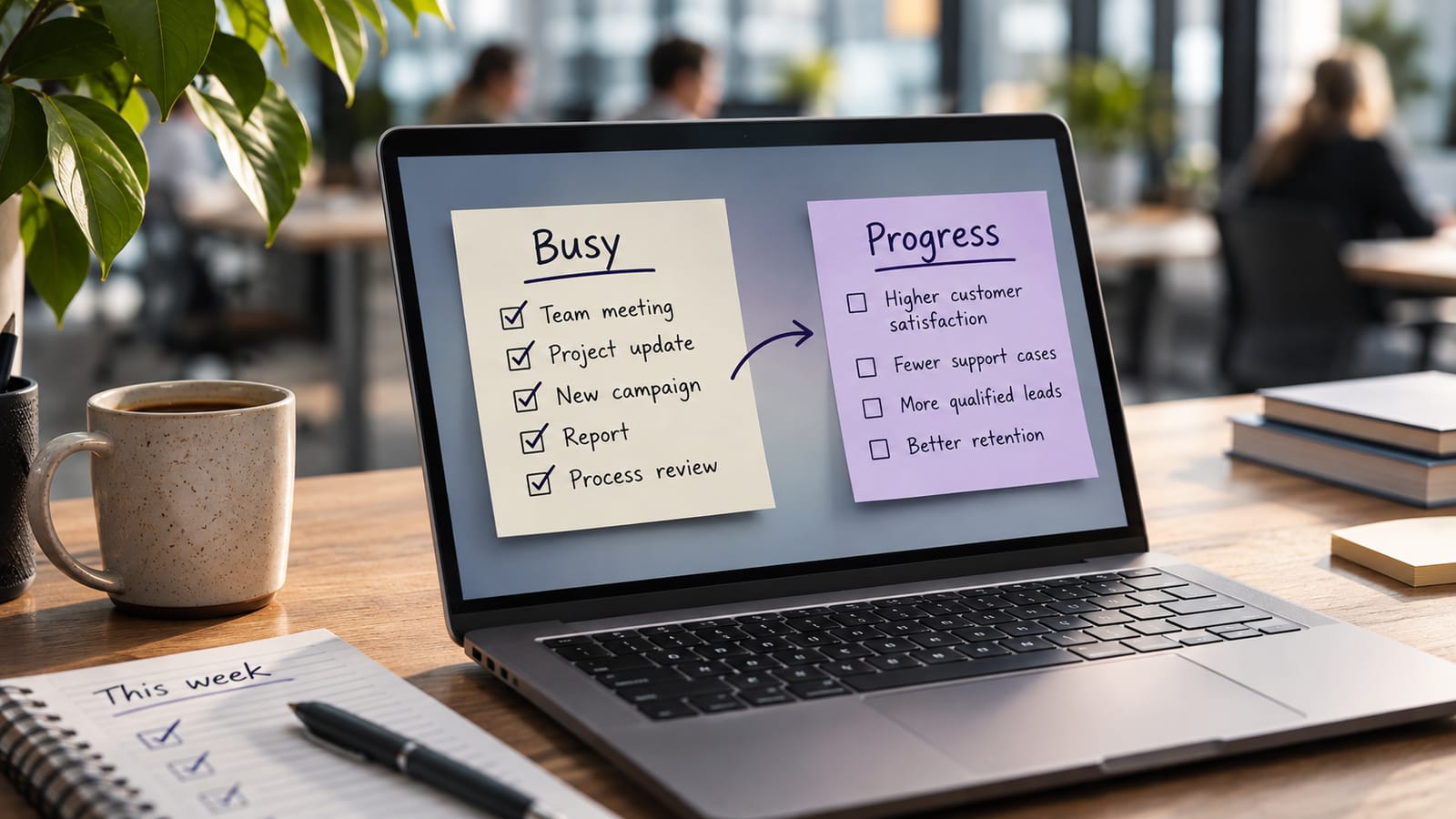
| OKRs confused with a roadmap | Key Results turn into a list of shipped features or completed tasks instead of outcomes | Ask of every Key Result: "if we did this and nothing changed for the customer or the business, would it still count?" If yes, it's a task, not a Key Result |
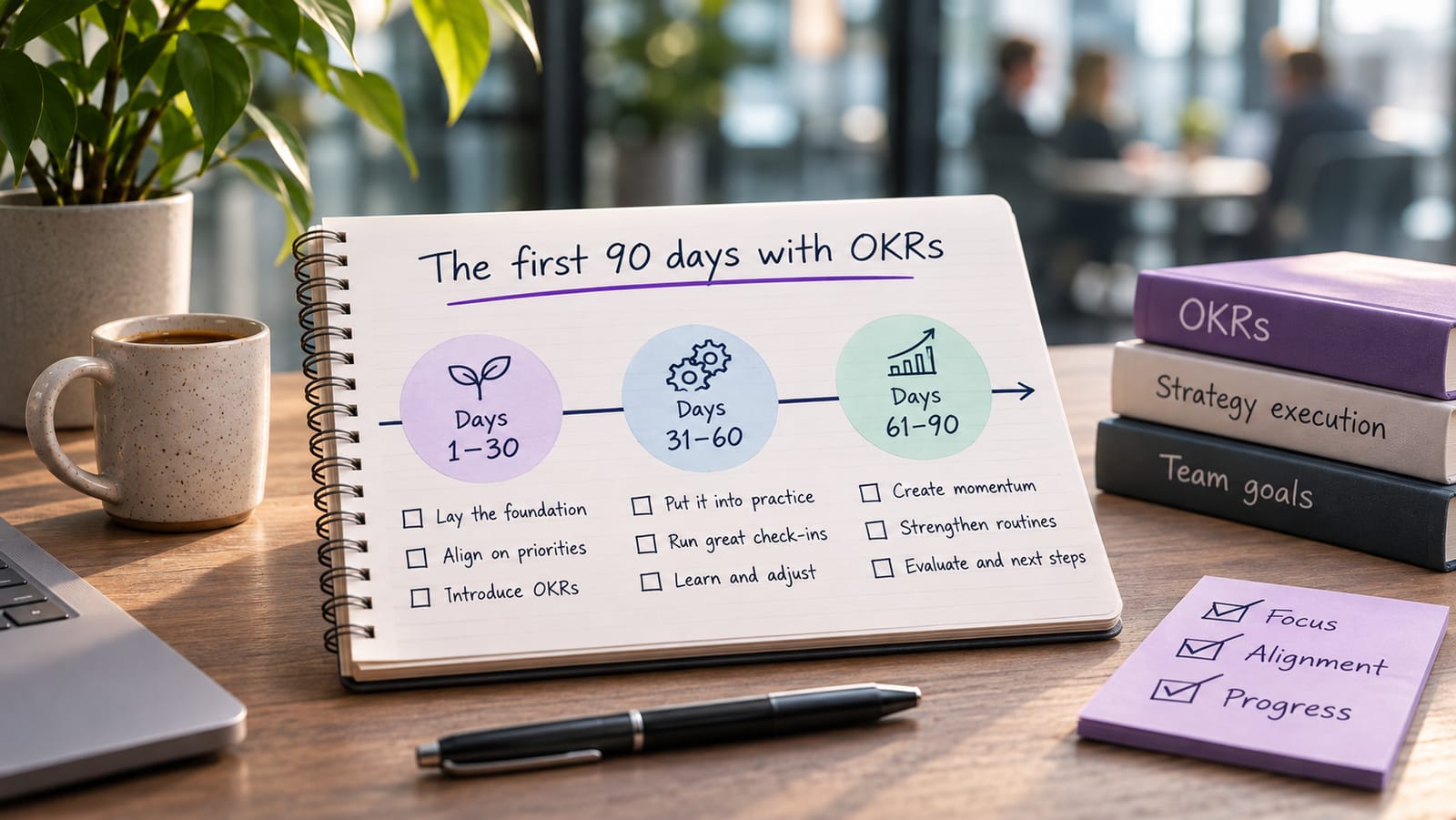
| Set-and-forget cadence | Objectives get typed in once, reviewed once, and otherwise ignored for the whole quarter | Weekly check-ins (see above) plus a genuine mid-quarter review where it's fine to adjust a Key Result that's turned out to be the wrong one |
The Platform Gets You Most of the Way. The Habits Get You the Rest.
Every practice above is a habit, not a setting. If you want hands-on help building those habits rather than figuring them out alone, that's what OKR Care is for: an add-on that pairs your team with a dedicated OKR consultant for rollout planning, writing workshops, and quarterly health checks. A platform can show you the gap between what you planned and what's actually happening; closing that gap is still a people problem, and OKR Care exists specifically for the first couple of cycles, when that gap is widest.
If you're already a Futureworks customer and this surfaced a habit worth fixing, that's worth raising with your team even before you reach for OKR Care. If you're evaluating the platform and want to see what this actually looks like in practice, you can start a free trial and run one real cycle through it before deciding.
Ready to put OKRs into practice?
See how Futureworks helps teams align, track, and execute every week.