When the Dashboard Lights Up Green and Nothing Happens
Lessons on OKRs in practice from Martin Mellander at Nordic Hotels & Resorts.
Most organisations measure that people are busy. Not whether the work is actually working. That is the most expensive gap in execution, and almost no one talks about it.
In a new episode of the OKR podcast, I sat down with Martin Mellander at Nordic Hotels & Resorts, part of Strawberry. Martin is a behavioural scientist by training, has a background as a business controller, and has rolled out OKRs across roughly 20 hotels. He gave me the sharpest practical example I have heard in a long time.
The coffee question
A hotel wanted to grow restaurant sales. The solution was simple. Waiters should ask every guest if they would like a coffee before the bill arrived. And they should count how many times they asked.
So they ended up with a key result: the number of questions asked.
The problem shows up the moment the manager asks "did you do it?". There are strong incentives to say yes. Even when the answer is no. The number looks great. You asked the question 80 times today. And the average spend per guest has not moved a single krone.
Activity is not a key result
That is the lesson. Asking about coffee is an activity. It is fine as an activity. But it does not work as a key result.
A key result needs two things. It needs to be reliable, meaning something you cannot talk your way out of. And it needs to be valid, meaning it actually measures what you are after.
Average spend per guest has both. You cannot fudge it. Either the average went up or it did not. The activity is asking the question. The result is the number you cannot negotiate with.
We humans have a built-in pull toward activities. They are easy to set, easy to tick off, easy to report. Outcome targets are uncomfortable. They put pressure on an ordinary working day. So most people flee to activities. And that is where execution dies.
Green numbers can lie
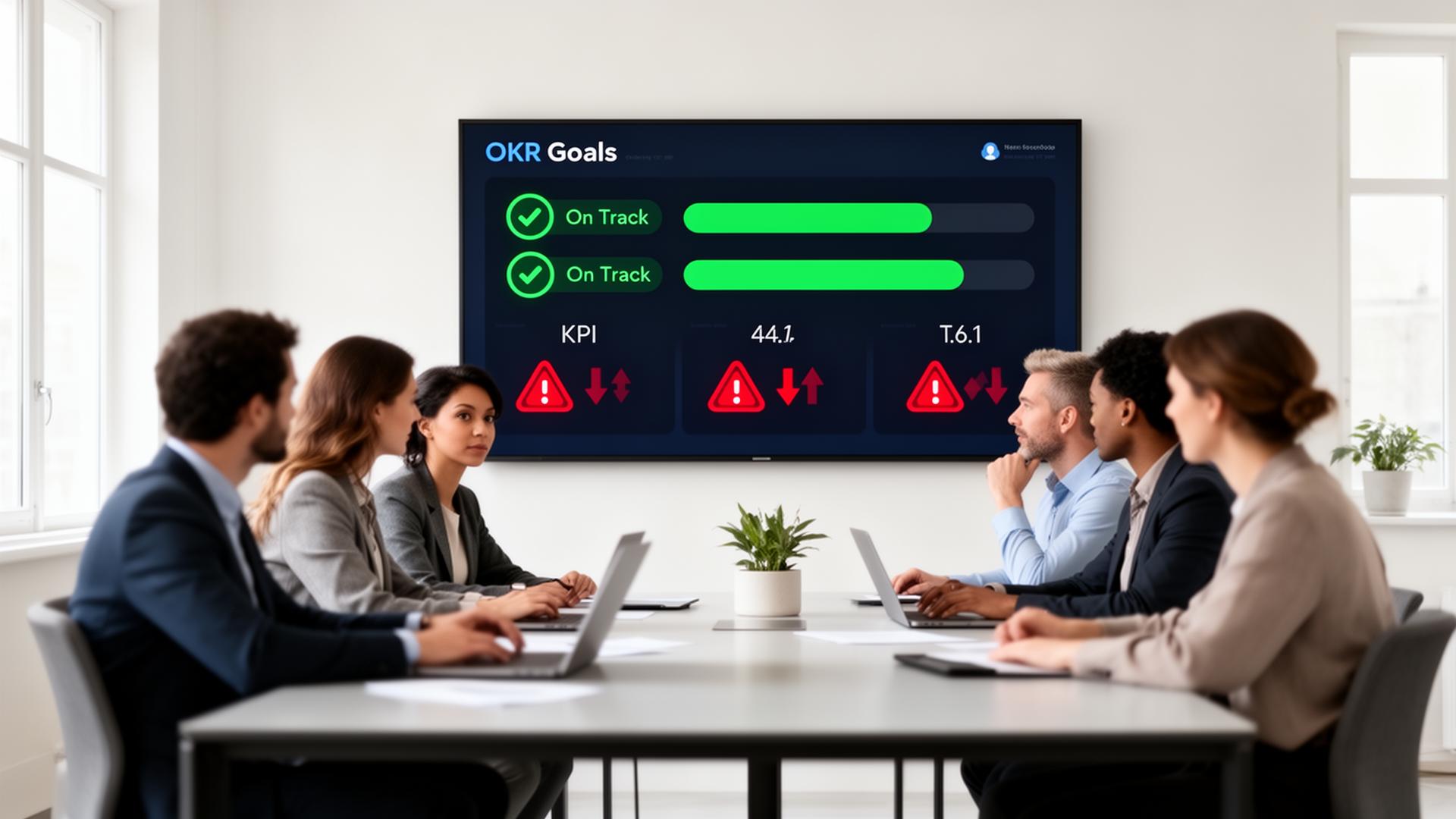
The bigger trap is this. You are working with a stack of leading indicators. Everything is green. You are doing all the things you agreed to do. And still, nothing moves in the numbers that matter.
Have you succeeded? No.
Leading indicators are only worth something if they connect to a lag measure you actually care about. By all means, send the pre-arrival email. But if you are not tracking whether the average order per guest is actually going up, you do not know if the email works. It might be worded completely wrong. You look busy. You move nothing.
Always connect the leading measures to a top-level KPI. If you do not see the effect up top, either the measures are wrong, or you are doing them wrong. Both are worth knowing. Neither one is visible if you only stare at the green.
Three lessons on rollout
Martin was honest about what he would do differently.
They rolled out too broadly, too fast. Wide across many hotels, quickly, without piloting first. He would have started at one hotel, been physically present, and made the local manager an ambassador before moving on. Pilot before scale.
They underestimated the follow-up. Training is not enough. Without enough people with the skill to follow up properly, everything takes longer than you think.
And they met resistance. Some people love this from day one. Others have worked their way for 30 years and do not want a method forced on them. That is why leaders have to buy in first. Not as experts, but as people who believe this matters.
The change management trap
This is the most common reason change fails.
The leadership team sits and talks about a new direction for months. They get the why, 100 percent. Then they send out an email saying this is how things work now.
Middle managers were not part of those three months. They did not get their why. So they lose motivation before they have even started. You cannot email your way to a shift. You have to bring people along.
And the best ideas rarely sit in the leadership team. They sit at reception and in the kitchen. Involve those people, and you get better ideas and people who actually want to execute them.
Separate operations from strategy
One more pattern that keeps coming back. If everything is equally important, nothing is important.
At Martin's organisation they split the meetings in two. One meeting for daily operations, where they look at the most important numbers every month. One meeting for strategic execution, where they talk about the journey and what is actually moving them forward.
Mix them, and the strategic meeting turns into reporting. Then it stops being strategy.
Ownership belongs to one person
A last point that is easy to miss. An activity has to have one owner. Not a team.
Give a whole team the responsibility and no one really knows who should do the job. One person thought the other had it. Ownership disappears. Set one owner, one clear how, and one deadline. Then everyone knows who to talk to.
This is why we are building Futureworks
It all comes down to one thing. Strategy is not a document on the wall. It is a weekly rhythm, and that rhythm is hard to hold without help.
You have to separate operations from strategy. You have to set key results you cannot fudge. You have to connect the leading to what counts. And you have to bring people along, week by week, not in an email.
That is exactly the job Futureworks does. Run the company weekly, do not update the goals once a quarter.
Listen to the full episode with Martin on the OKR podcast.
Klar til å ta OKR-er i bruk?
Se hvordan Futureworks hjelper team å samkjøre, spore og gjennomføre hver uke.